Lazy Line Mooring: A Practical Guide to Safe and Easy Handling
Mooring the bow to a lazy line is a common practice in marinas across the Mediterranean, necessitating skill and precision, especially in adverse weather conditions. Securing the boat swiftly and safely, without risking injury or collision with other vessels, is paramount.
What is Lazy Line?
Lazy lines, also known as mooring lines, are commonly used in Mediterranean mooring, a stern-to or bow-to mooring method that is widespread throughout the Mediterranean and increasingly used in marinas around the world.
Instead of dropping a traditional anchor, the boat uses a permanently installed mooring system. A concrete block or other heavy seabed anchor acts as the “dead anchor,” with one end of the mooring line attached to it and the other end led toward the marina berth.
How do lazy line mooring work? Challenges When Retrieving a Lazy Line
Retrieving the lazy line from the bow can be difficult because it often lies deep below the surface. Manual transfer from the stern to the bow can also be cumbersome, especially in adverse weather conditions.
When arriving at the berth, the crew picks up the lazy line, pulls the mooring line from the seabed and secures it to a cleat on the boat. In theory, this process should be simple. In practice, however, retrieving and handling a lazy line can present several challenges, especially when the line is heavy, dirty, covered with marine growth or difficult to reach from the deck.
Step-by-Step: How to Handle a Lazy Line During Stern-To Mooring
-
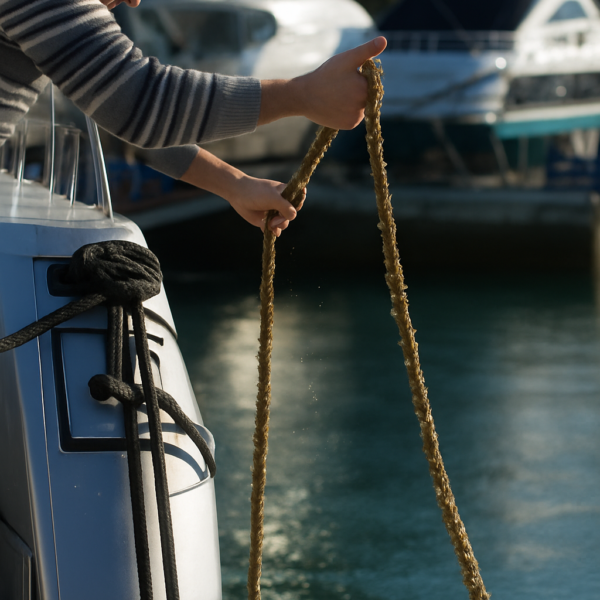
When the boat approaches the dock stern-first and has almost stopped, one crew member secures the stern lines, starting with the windward stern line. The helmsman then moves the boat slightly away from the dock and keeps it aligned by using gentle forward propulsion. At the same time, another crew member picks up the lazy line and prepares to transfer it toward the bow.
-
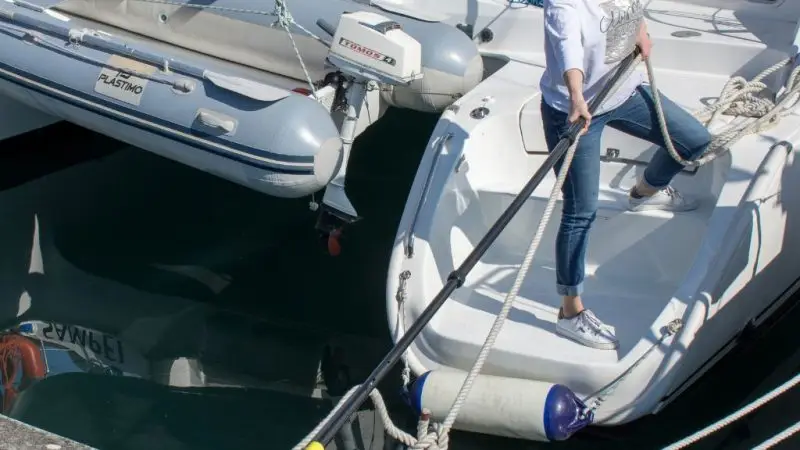
Once the lazy line has been retrieved, the crew member puts the boat hook aside and quickly starts moving the line forward along the side deck.
-
The lazy line can be transferred by hand, moving it progressively from the stern toward the bow, or with the help of a suitable tool. For example, the
GHOOK
allows the line to be guided forward more easily while reducing direct contact with the dirty mooring line.
-
Once the crew member reaches the bow cleat, the dirty lazy line is placed over the cleat so that the mooring line can be controlled safely.
-
The crew then pulls on the lazy line to tension the mooring line and move the bow away from the dock, helping to position the boat correctly in the berth.
-
When the correct position and tension are reached, the mooring line is securely fastened to the bow cleat.
-
Finally, the helmsman applies gentle reverse propulsion to tension the already secured stern lines and stabilize the boat in its final stern-to mooring position.
The Most Common Lazy Line Handling Mistakes
-
Allowing the lazy line to get too close to the propeller.
If the thin pickup line attached to the dock is too long, it can drift toward the stern and into the propeller area. The propeller creates water movement that can push the line back toward the boat, increasing the risk of it becoming wrapped around the propeller. This can cause damage and may require an underwater inspection or repair.
For this reason, the lazy line should be kept at an optimal length and under light tension. This also improves handling with the
GHOOK,
because a slight tension helps the rope run smoothly over the wheel. Whenever possible, keep the line moving away from the edge of the deck and away from the propeller area.
-
Using a lazy line that is heavily covered with marine growth.
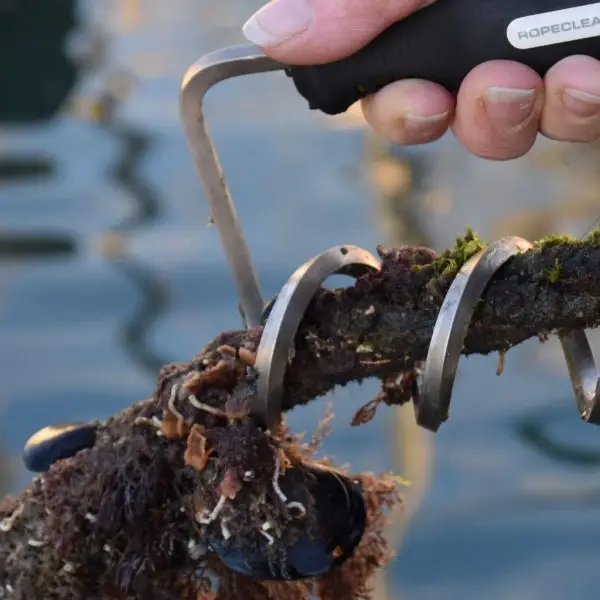
Lazy lines often become covered with algae, shells and other marine growth. This makes them heavier, harder to handle and more unpleasant to bring on board.
Regular cleaning helps keep the mooring line lighter, cleaner and easier to use. A practical tool for this is the
ROPECLEANER.
By cleaning the line approximately twice a year, you can reduce the build-up of shells and marine growth and keep the mooring line in much better condition.
-
Trying to handle the lazy line before securing the stern lines.
During stern-to mooring, especially in a crosswind, the boat can quickly move sideways if it is not stabilized first.
The recommended procedure is to secure the stern lines first, beginning with the windward stern line, and then use gentle forward propulsion to keep the boat aligned and prevent sideways movement caused by the wind. Once the boat is stabilized, the crew can safely continue handling and transferring the lazy line toward the bow.
How to Keep Your Hands and Deck Clean
One of the most unpleasant parts of handling a lazy line is direct contact with mud, algae, shells and marine growth. Because the line usually lies on the seabed, it can become dirty very quickly and may leave stains, unpleasant smells and marine debris on the deck.
To keep both your hands and the boat cleaner, try to minimize direct contact with the lazy line. Instead of pulling the line across the deck or passing it through your hands for a long distance, guide it along the outside edge of the boat whenever possible.
Using a suitable handling tool, such as the GHOOK, can help you move the lazy line from the stern toward the bow while reducing direct contact with the dirty rope. This is especially useful on boats with narrow side decks or when handling the line in difficult weather conditions.
It is also important to keep the mooring line itself clean. Regular maintenance reduces the accumulation of shells, algae and other marine growth, making the line lighter, easier to handle and less likely to soil the deck.
A practical solution is the ROPECLEANER. Cleaning the line approximately twice a year can significantly reduce marine growth and help keep the mooring system in better condition.
For best results, also consider using protective gloves when handling heavily fouled lines, and rinse the deck with fresh water after mooring if mud or marine residue has been brought on board.
How to Handle a Lazy Line in Crosswind
Handling a lazy line in a crosswind is one of the more demanding parts of stern-to mooring, especially when the wind reaches around 12 knots or more from the side. In these conditions, good crew coordination, correct timing and precise boat handling become essential.
The first priority is to correctly assess the approach to the berth. The boat should approach stern-first, slowly and under full control, leaving enough room to correct the course if the wind starts pushing the boat sideways. The helmsman should always be prepared to use forward propulsion to regain control and stop excessive sideways drift.
Before entering the berth, the crew should also carefully prepare the fenders. Their height and position should match the expected contact points on the dock and neighbouring boats, especially on the side exposed to the wind.
The stern lines must be prepared in advance so they can be deployed quickly and without tangles. A practical technique is to divide the coiled rope into two smaller bundles, holding one bundle in each hand. This makes the throw more controlled and helps the line extend more smoothly toward the dock.
If a marina assistant is waiting on the dock, the stern line should be thrown clearly and accurately so it can be caught immediately. The windward stern line should be secured first, either to a dock cleat or to a mooring ring.
Once the windward stern line is secured, the helmsman can apply gentle forward propulsion. If this is done quickly enough, the combination of the secured stern line and forward engine power helps stop the sideways movement caused by the crosswind and stabilizes the boat in the berth.
Only after the boat is under control should the crew continue with the lazy line, moving it forward toward the bow and securing the forward mooring line. In strong crosswinds, speed, preparation and communication between the helmsman and crew are critical for a safe and controlled maneuver.
Using GHOOK for Easier Lazy Line Handling
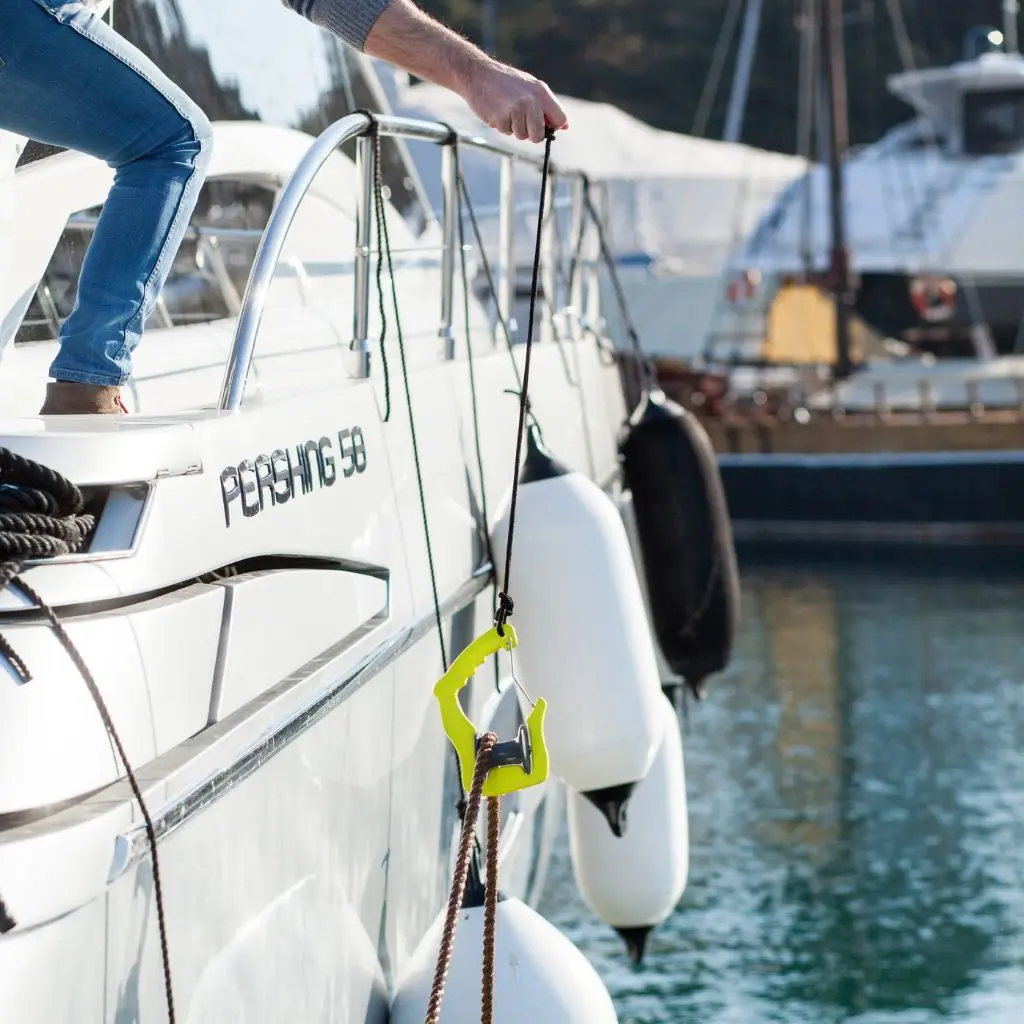
The GHOOK is one of the tools that can make lazy line handling easier, particularly when the line needs to be transferred from the stern toward the bow.
-
Faster transfer: The GHOOK can help move the lazy line forward more quickly and in a controlled way, especially when compared with passing the line repeatedly from hand to hand.
-
Easier handling: Its design allows the crew member to guide the line with one hand, which can be useful on narrow side decks or when the boat is moving in waves.
-
Cleaner handling: Because the lazy line runs over the wheel, direct contact with mud, algae and marine growth can be reduced.
-
Improved safety: Reducing direct contact with a dirty or heavily overgrown line can also lower the risk of cuts, slipping or losing balance while moving toward the bow.
For longer boats or situations where additional reach is useful, the
GHOOK with Rope Extension
or the
HOOKLINKER
can provide more flexibility when transferring the lazy line along the side of the boat.
Choosing the Right Lazy Line Handling Method for Your Boat
Different boats require different approaches to lazy line handling. The most suitable GHOOK version depends mainly on the size of the boat, the distance from the stern to the bow, and how easily the crew can move along the side deck.
-
GHOOK
The standard GHOOK is generally suitable for smaller boats and sailboats up to approximately 7 metres in length. It allows the crew to guide the lazy line forward while reducing direct contact with the dirty mooring line. -
GHOOK with Rope Extension
For larger boats, typically above approximately 7 metres, the GHOOK with Rope Extension provides additional reach. This can be particularly useful when the distance between the stern and bow is greater and when between the neighbour boat is enaugh space that the extension with GHOOK can pass through. -
GHOOK Plus+
On boats with limited access from the stern to the bow, narrow side decks or a central walkway, GHOOK Plus+ offers another method of transferring the device forward. An additional guide point allows the GHOOK to be pulled from the stern toward the bow using the attached rope, reducing the need for the crew member to carry the device along the full length of the boat.
The best solution therefore depends on the boat length, deck layout and crew access. Smaller boats may only require the standard GHOOK, while larger boats or vessels with more restricted deck access can benefit from an extension or an alternative transfer method.
In the video below, you can see several different lazy line transfer methods demonstrated: the traditional hand-to-hand method, the transfer method using GHOOK Plus+, and the use of GHOOK with a rope extension.
Explore related posts
Read more about our products and news
11.03.2025
11.03.2025
11.03.2025
06.03.2025
05.03.2025